The difference in one line
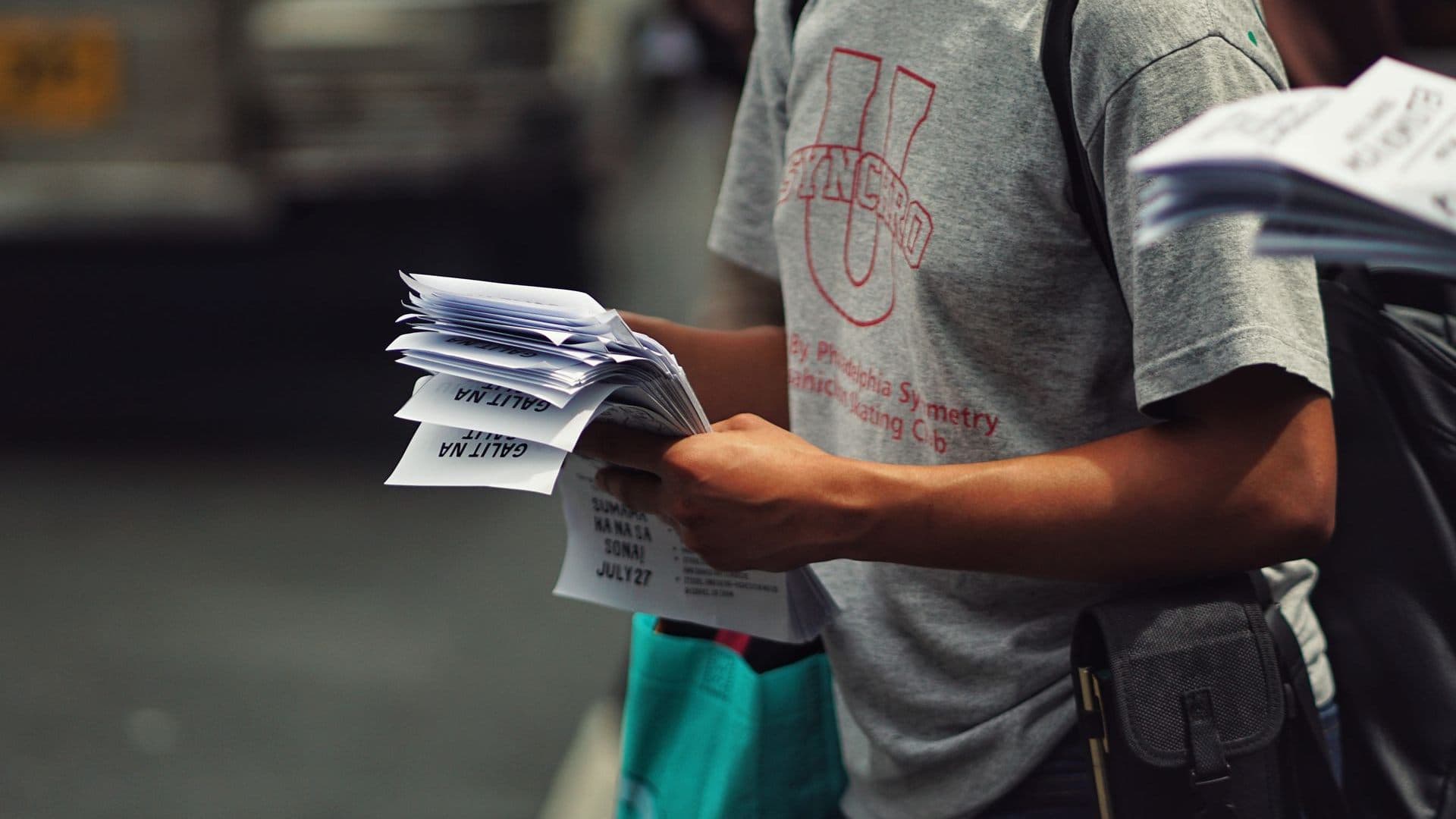
A flyer is handed to a person and goes wherever they go: into a pocket, onto a fridge, into the bin at the end of the street. A poster stays where it was put, in a place that has agreed to display it, and works on whoever passes. That single difference explains most of what follows.
Neither is universally better. The question is which one fits the audience, the place and the moment the campaign needs.
Interaction
A handed flyer involves a moment between two people. Someone offers it, the other person decides to take it, and for a second the campaign has their attention. That moment is the strength of hand-to-hand flyer distribution, and it is why the person handing it over, and where they stand, matter so much.
A poster has no such moment. It relies on being noticed. That makes the location and the design do all the work.
Dwell time
A flyer is read in seconds, then either kept or dropped. A poster in a shop or a music store can be seen repeatedly by the same regulars, and by anyone waiting at the counter. For an audience that keeps returning to the same places, a poster gets more than one look.
How much the message can carry
A flyer can carry more. It is held at reading distance, it has a back, and a QR code is already in someone's hand next to their phone. A poster is usually read in passing, from further away. It needs the name, the date, the place and one next step, and very little else.
If the campaign needs a lot of explaining, a poster is the wrong place to do it. Put the detail on the page the poster or flyer points to.
Events and fixed sites
Flyers suit moments when the audience gathers: a queue, a show night, a busy nightlife area, a festival crowd. Posters suit places the audience returns to over time: shops, music stores and other suitable locations. Poster distribution is planned around those fixed places, agreed for each brief.
Duration
A flyer campaign happens in sessions. When the session ends, nothing new is handed out. A poster keeps working for as long as the location displays it — which is agreed with the location, not assumed. That makes posters useful for a build-up over several weeks, and flyers useful for hitting a specific night.
QR codes and what they prove
Both can carry a QR code or a short URL. A scan is useful because it can be counted: some people saw the flyer or poster and acted on it. It is not proof of a sale. People see a poster, hear about the show from a friend, and buy a ticket a week later on a laptop. The scan catches some of the response, not all of it, and it should be read that way.
When to use both
Many live campaigns use both at different points. Posters in shops and music stores near the venue in the weeks before a show, then flyers outside the venue and around the area in the final week, is a common shape. The poster builds familiarity; the flyer catches people at the moment they can act.
For a Kent campaign, flyer distribution in Kent explains how a local brief is usually shaped. To plan either format from the start, read how to plan a flyer or poster campaign.